* NOTICE: Mr. Center's Wall is on indefinite hiatus. Got something to say about it? Click HERE and type.
Showing posts with label William Blake. Show all posts

Sunday, September 18, 2011

Sunday Poetry XLI -- Chimney-Sweeps

As most of you know, I am now in law school.  While I embrace the material (and it is, truthfully, remarkably exciting and engaging stuff), I definitely miss my regular indulgence in the otherwise finer literatures of fiction and poetry.  And what with the extraordinary quantity of reading I’m doing, and that just simply to keep afloat, I feared I’d never—at least for these next three years—be able to, well, take to calmer, more artistic waters.  It turns out my fear is only mostly affirmed; while I certainly don’t have time to read much else of anything save the Law, such studies recall with not inconsiderable frequency the general, essentially mundane, but overall poignant, concerns and citizenry that inspire pretty much everything any great author has ever treated.  Property Law has done it now, and with significance, twice (I mentioned it over at my other blog, should you care to look).  Wednesday, it recalled, though less directly even than Kafka, William Blake.

A London chimney-sweep, whose title, we’re lead to assume from the judge’s opinion and holding, was superior in the boy than as to any previous owner (save, of course, the mythical first owner who never appears in such cases), found a jeweled brooch.  While the case further disregards the socio-political treatment and purview of the little dirty boys hired out, Dickensian-style, to the upper and middle classes of the citified home-owners, we do get a glimpse of it out from between the lines.

The boy takes the brooch to a local jeweler for appraisal.  The proprietor's apprentice, who answers his call, claims it worth but a pittance and takes the brooch, awarding the boy the “estimated” cash value.  The boy, however, doesn’t want the money; he wants the brooch, which, naturally, the apprentice refuses.  What I don’t get is what happens next.  Somehow, the chimney-sweep manages to hire a lawyer (and I suspect this speaks more of the tremendous range of class of legal service providers available in London than any likely, or even possible, condescension of the highbrow), and win a judgment from the court awarding him something like 65 pounds.  Those of you who know at least as much as the little bit I do about 19th century money in England should get the significance of this.  What you may not get is the true earth-shaking-ness that this award was landed by a chimney-sweep!

Perhaps Blake can give an indication.

If you’re unfamiliar with Blake’s Songs of Innocence and Experience (essentially parallel pieces exploring the differences in life and the examination thereof as dependent upon Reader's perspective, that of innocence or experience, or the given situation in life, chiefly by age, which is, of course, always some point along the continuum between either innocence or experience), I highly recommend you read them—a lightning fast read, even if you take the time to get what he’s doing.  I’m not going to get into it all here, but at least be aware that Blake understood, and with the aforementioned Dickensian perceptivity, what life meant to a chimney-sweep boy: something as black and hopeless as the soot they’re coated in.  Oh, and the mortality rate was staggering!  Yeah, and they were kept in small herds by pimps who often beat and abused them.  (Okay, I’ll stop.  Enjoy the poetry.  They, are, I think, some of the very finest there are, and certainly among my favorites.)

The Chimney-Sweeper
by William Blake
from Songs of Innocence
When my mother died I was very young,
And my father sold me while yet my tongue
Could scarcely cry ‘weep! ‘weep! ‘weep!
So your chimneys I sweep, and in soot I sleep.

There’s little Tom Dacre, who cried when his head,
That curled like a lamb’s back, was shaved: so I said,
“Hush, Tom! Never mind it, for when your head’s bare,
You know that the soot cannot spoil your white hair.”

And so he was quiet; and that very night,
As Tom was a-sleeping, he had such a sight, —
That thousands of sweepers, Dick, Joe, Ned, and Jack,
Were all of them locked up in coffins of black.

And by came an angel who had a bright key,
And he opened the coffins and set them all free;
Then down a green plain leaping, laughing, they run,
And wash in a river, and shine in the sun.

Then naked and white, all their bags left behind,
They rise upon clouds and sport in the wind;
And the angel told Tom, if he’d be a good boy,
He’d have God for his father, and never want joy.

And so Tom awoke; and we rose in the dark,
And got with our bags and our brushes to work.
Though the morning was cold, Tom was happy and warm;
So if all do their duty they need not fear harm.

*

The Chimney-Sweeper
by William Blake
from Songs of Experience
A little black thing among the snow,
Crying! ‘weep! weep!’ in notes of woe!
‘Where are they father and mother? Say! —
“They are both gone up to the church to pray.

‘Because I was happy upon the heath,
And smiled among the winter’s snow,
They clothed me in the clothes of death,
And taught me to sing the notes of woe.

‘And because I am happy and dance and sing,
They think they have done me no injury,
And are gone to praise God and His priest the king,
Who made up a heaven of our misery.’

*

Once enough, you think?  Read them again.  Examine the poetic conventions that hold them together.  Look at how they compare, one to the other.  How do they fit within their respective collections, “Innocence” and “Experience”?  Who is Blake’s audience—is it multifaceted?  What is he saying to those who read?  Are the chimney-sweepers part of that audience? 

Sunday, February 20, 2011

Sunday Poetry XVI' -- THE EPIGRAM and an EPITAPH

Epitaph
Timothy Steele
Here lies Sir Tact, a diplomatic fellow
Whose silence was not golden, but just yellow.

Epigram Engraved on the Collar
of a Dog Which I Gave to His Royal
Highness
Alexander Pope
I am his Highness' dog at Kew;
Pray tell me, sir, whose dog are you?

Readers and Listeners Praise
My Books
Martial
Readers and listeners praise my books;
You swear they're worse than a beginners.
Who cares?  I always plan my dinners
To please the diners, not the cooks.

Of Treason
Sir John Harrington
Treason doth never prosper; what's the reason?
For if it prosper, none dare call it treason.

Moderation
Robert Herrick
In things a moderation keep,
Kings ought to shear, not skin their sheep.

Her Whole Life is an Epigram
William Blake
Her whole life is an epigram: smack smooth, and neatly penned,
Platted quite neat to catch applause, with a sliding noose at the end.

A Politician
E.E. Cummings
a politician is an arse upon
which everyone has sat except a man

Prayer
Langston Hughes
Oh, God of dust and rainbows, help us see
That without dust the rainbow would not be.

This Humanist Whom no Beliefs Constrained
J.V. Cunningham
This Humanist whom no beliefs constrained
Grew so broad-minded he was scatter-brained.

Jamesian
Thom Gunn
Their relationship consisted
In discussing if it existed.

A Venus Flytrap
Brad Leithauser
The humming fly is turned to carrion
This vegetable's no vegetarian.

Fatigue
Hilaire Beloc
I'm tired of Love: I'm still more tired of Rhyme.
But Money gives me pleasure all the time.

Variation of Belloc's "Fatigue"
Wendy Cope
I hardly ever tire of love or rhyme--
That's why I'm poor and have a rotten time.


Taken from Literature; An Introduction to Fiction, Poetry, and Drama; Seventh Edition

Monday, January 17, 2011

Jane Eyre XXII -- chapter 22: EMOTIONAL MASONRY

  1. "You are not without sense, Cousin Eliza; but what you have, I suppose in another year will be walled up alive in a French convent. However, it is not my business, and, so it suits you, I don't much care."  Immurement is an ugly thing.  I imagine this reference to masonry isn't exactly how Jane or Bronte intended it, but I think it's indeed rather fitting.
  2. Interesting that the death of Mrs. Reed and the dispersion of the Reed family happen roughly the same time as the death of Jane's relationship--or hopes for one--with Mr. Rochester.
So.  Chapter 22: a surprisingly--or uncharacteristically--short chapter!  It leaves me thinking about the idea of immurement.  (If you haven't clicked the link, do so and read up, unless you already know all about it.)  Forget for a minute the capital-punishment element, and even the literal walling-up element (especially since wikipedia has listed all the stuff--the literary and folkloric references to this particular and very romantic act and mode of death--I would be talking about otherwise); is there a connection within the confines of our book here between a potentially figurative immurement and our modern notion of putting up and tearing down walls--emotional walls?

"Count Ugolino and His Sons in Prison," by William Blake

Tuesday, December 14, 2010

Jane Eyre II -- chapter 2: DOWN THE CHIMNEY

Reading Questions

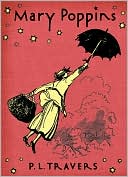
    Mary Poppins by P. L. Travers: Book Cover
    by Mary Shepard
  1. (When I read the words of Miss Abbot and Bessie, I can't help but hear in my mind the voices of the cook and servant in the Banks' house from Mary Poppins.)
  2. It's hard to gain an accurate perspective of a character--or any character--with a first-person narrative, because we can only see through her eyes.  How can we learn the truth?  What other books do you know where similar issues arise, yet you as the reader are able to glean the true nature of characters and situations?
  3. Jane is 10 and clearly prejudiced against her family, perhaps as much as the family is prejudiced against her.  But Jane is also very intelligent.  What could she do to get along better?  More importantly, why doesn't she?  (Consider the type of novel this is, which, really, shows more of the author than of Jane.)
  4. This early in the novel, the potential for conflict, complications, and character development are wide open.  The Gothicism of the novel permits a level of the supernatural.  This "red room" reminds me of a certain, more famous wardrobe--or perhaps a looking glass.  As you read this chapter, what is there of the supernatural, and how might you justify its reality, rather than just dismiss it as tricks of the imagination?
  5. "...for if you don't repent, something bad might be permitted to come down the chimney and fetch you away." A chimney is an interesting thing, and quite a source for superstition--everything from Mary Poppins and Santa Claus to witches and chimney sweeps traverse these passageways.  Most commonly, and before the advent of stoves and ovens, the hearth was the center of the home, much like the idealism that says a kitchen is that center today.  Good things--though wrought from superstition--came down them (indeed, this is where the Jolly Old Elf has his true beginnings).  But on the hand, there's a dark mystery to them, as much a portal as any wardrobe or mirror, and usually it's the bad stuff that goes out them, like, from the most basic, smoke.  Chimney sweeps, far from the lucky shtick of Mary Poppins were the most unlucky kids around (see complimentary poems by William Blake below), and they went up chimneys.  Witches did not escape through doors to perform their mischief, but through the chimney on their brooms.  I've looked all over the place, and I can't find another example of something bad coming down the chimney, like what Miss Abbot suggests might come after Jane.  I highly doubt this is deliberate juxtaposition (except maybe there's a superstition of something coming down the chimney that I haven't found yet), but what if that reversal were intentional and that something bad--contrary to all tradition--did come into the house or Jane's presence via the chimney?  I've got some ideas, but none particularly well-formed.  Thoughts?
  6. "Unjust!--unjust!" cries Jane, and then says that REASON brought about her complaint.  What is the difference between reason and romance, and--pick one--how is she right or wrong in ascribing the value of her predicament to the former?
  7. A case for stepmothers: Why might it take an unnatural ("unnatural" like in the evolutionary context) empathy to truly care for a foster child "as one's own"?

***

The Chimney Sweeper, from Songs of Innocence
William Blake
When my mother died I was very young,
And my father sold me while yet my tongue
Could scarcely cry 'weep! 'weep! 'weep! 'weep!
So your chimneys I sweep, and in soot I sleep.

There's little Tom Dacre, who cried when his head,
That curled like a lamb's back, was shaved: so I said,
"Hush, Tom! never mind it, for when your head's bare,
You know that the soot cannot spoil your white hair."


And so he was quiet; and that very night,
As Tom was a-sleeping, he had such a sight, - 
That thousands of sweepers, Dick, Joe, Ned, and Jack,
Were all of them locked up in coffins of black.

And by came an angel who had a bright key,
And he opened the coffins and set them all free;
Then down a green plain leaping, laughing, they run,
And wash in a river, and shine in the sun.

Then naked and white, all their bags left behind,
They rise upon clouds and sport in the wind;
And the angel told Tom, if he'd be a good boy,
He'd have God for his father, and never want joy.

And so Tom awoke; and we rose in the dark,
And got with our bags and our brushes to work.
Though the morning was cold, Tom was happy and warm;
So if all do their duty they need not fear harm. 

*

The Chimney Sweeper, from Songs of Experience
William Blake
A little black thing in the snow,
Crying "weep! weep!" in notes of woe!
"Where are thy father and mother? Say!"--
"They are both gone up to the church to pray.

"Because I was happy upon the heath,
And smiled among the winter's snow,
They clothed me in the clothes of death,
And taught me to sing the notes of woe.


"And because I am happy and dance and sing,
They think they have done me no injury,
And are gone to praise God and his priest and king,
Who make up a heaven of our misery."
Related Posts Plugin for WordPress, Blogger...